The Scrapbook as a Record of Being a Film Fan
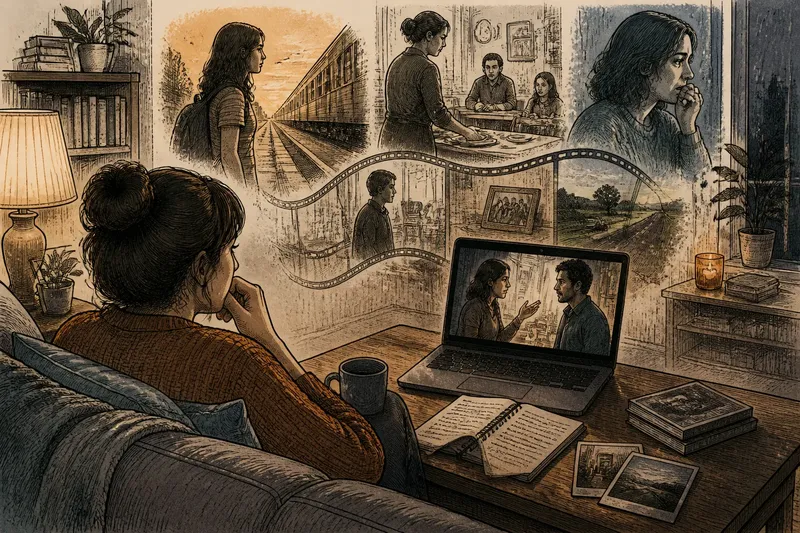
A film-fan scrapbook preserves tickets, programmes and personal notes, linking each film to the people, places and moments that shaped your viewing memory.
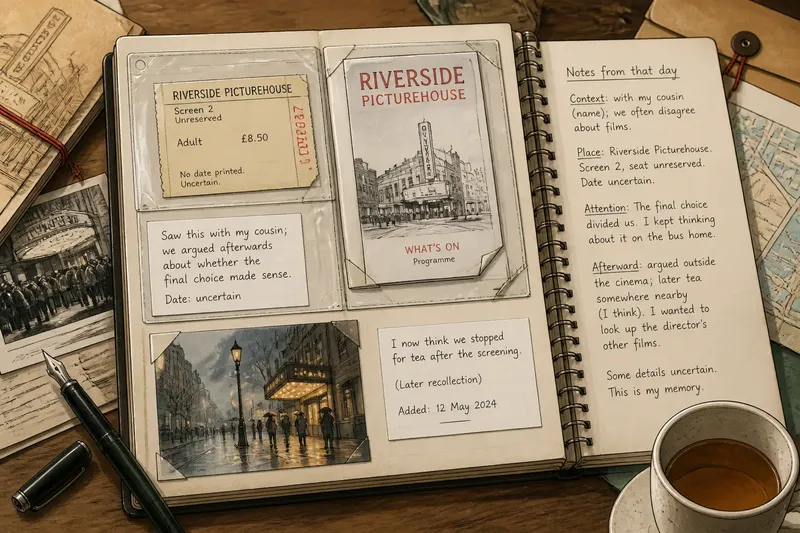
A film-fan scrapbook can hold a ticket from a rainy afternoon, a folded programme and the note you scribbled before the details slipped away. Together, these objects record more than a film’s title: they show how it entered your life. Unlike a formal film archive, which organises material to document cinema, a personal scrapbook keeps the viewer’s own encounters at its centre.
What belongs in a personal film collection?
Begin with things that came from an actual viewing or helped you remember it. A cinema ticket, programme, printed booking confirmation, handwritten note or small item picked up at the venue can each anchor a page. The object need not be rare. Its value lies in the connection you can explain.
Keep the distinction between an artefact and your record of it. A programme may tell a future reader which films were on offer, while your annotation can record which one you chose and why. A ticket may preserve a venue name; a note beside it can say who came along or what made that outing memorable.
- Ticket stubs: check whether the film and venue are printed; if either is missing, add only the detail you can recall and mark uncertainty.
- Programmes: check which pages relate to the screening; if only a few are relevant, keep those pages or use an archival-safe slip to mark them, otherwise retain the programme intact.
- Personal notes: check whether the note captures a thought, question or reaction; if it does, keep it in your own words, otherwise add a concise caption rather than padding the page.
- Related paper: check whether a flyer or booking confirmation clarifies the encounter; if it does, include it, otherwise leave it out to keep the page focused.
- Captions: check whether the people, place and film are identifiable; if a detail is uncertain, label it as uncertain or omit it.
- Condition: check whether an item is brittle, torn or otherwise fragile; if it is, store it separately in a suitable protective sleeve and use a description or copy in the scrapbook.
Selection makes a scrapbook readable. Saving every scrap can turn a record into a storage problem, while keeping only pristine pieces may erase the details that make it personal. Choose items that help tell a particular story: a first visit to a cinema, a film seen with a friend, or a screening that prompted you to seek out another director’s work.
How can an annotation preserve the encounter?
Write close to the event when you can, but do not treat a later recollection as a failure. A brief note made on the way home might capture a response that a polished review would smooth over. If you add something later, mark it as a later recollection rather than blending it into the original note.
Useful annotations are concrete. “The ending stayed with me” describes a response, but not its circumstances. A note such as “I kept thinking about the last scene on the bus home” offers a small setting and a trace of what followed. You do not need to explain the whole plot or write a verdict.
Try recording a few different kinds of detail:
- Context: check whether you remember who accompanied you; if you do, name them or describe the relationship, otherwise say you are unsure.
- Place: check whether the cinema or screening venue is known; if it is, record its name, otherwise leave the location open rather than guessing.
- Attention: check whether a scene, sound or performance stands out; if one does, describe that detail, otherwise record the reaction you do remember.
- Afterward: check whether you recall what you discussed, looked up or wanted to watch next; if you do, note it, otherwise do not invent a follow-up.
These details keep the page from becoming a miniature review. They also make room for uncertainty. If you cannot remember whether a screening was on a particular day, write “around that week” or leave the date open. A candid gap is more useful than a confident guess that later readers may mistake for fact.
How should the page connect objects and memory?
Arrange materials so that the relationship between them is clear. A ticket beside a short note may say more than several unrelated items crowded together. Treat the page like a small table set for one conversation: each object should have a place, and its caption should help explain why it is there.
For paper pieces, avoid fixing an original item with ordinary adhesive, which can stain or make removal difficult. Photo corners or sleeves made for archival storage can hold a ticket while leaving its printed surface visible. Pen and pencil suitability depends on the paper: some inks can feather or show through, and pencil can smudge or mark fragile surfaces. For a valuable or delicate original, write the caption separately rather than directly on it; if you do write on a separate caption, choose a material suitable for that paper and keep the caption beside, not on, the artefact.
Store the scrapbook away from damp, direct sunlight and rough handling. If an item is fragile or especially meaningful, consider keeping it in a separate protective sleeve and placing a copy or description in the book. The page can still tell the story without forcing a delicate original to bear repeated handling. For preservation questions specific to an item or material, follow its maker’s guidance or ask a qualified conservator.
Say you find a ticket from a film you saw with your cousin, but remember little else. Imagine the ticket names the cinema but not the date. You place it in a suitable sleeve, write on a separate caption, “Saw this with my cousin; we argued afterwards about whether the final choice made sense,” and label the date “uncertain”. Later, you recall stopping for tea nearby, so you add a separately dated note saying, “I now think we stopped for tea after the screening.” The resulting page preserves what you recall while making the uncertain timing and later addition visible.
What does a scrapbook preserve that an archive may not?
A formal archive generally describes and preserves materials for broader use: production records, publicity, correspondence or documents connected with a cinema’s history. A personal scrapbook has another purpose. It records how a viewer met films through ordinary routines, relationships and reactions that may never appear in institutional collections.
That difference does not make one kind of record more important than the other. An archive can establish where a programme came from or how a film was distributed. Your page can say that you carried the programme home because its cover reminded you of a friend. The first account serves documentary context; the second belongs to a particular life.
Keep those voices distinct. If you copy a line from a programme, mark it as printed text and identify its source. Set your own response apart with quotation marks, a different layout or a clear label. That small separation helps a future reader tell what the object says from what you remember.
How do you handle gaps, mistakes and changing memories?
A scrapbook is not a court record. Its purpose is not to prove every detail beyond doubt, but to preserve encounters honestly. If you later discover that a programme belonged to a different screening, add a correction with the date you made it. Leave the earlier note legible where possible; the change itself can show how your understanding developed.
When a memory changes, you can record both versions. Perhaps you once thought a film frightened you, but now remember laughing through much of it. Rather than replacing the earlier response, note the difference and what you can presently recall. The scrapbook then records not just a fixed opinion, but the movement of memory.
Which questions help shape a film-fan scrapbook?
Should I include films I disliked?
Yes, if the encounter matters to you. A short note about disappointment, confusion or an unexpected reaction can show how your tastes took shape without requiring a full review.
What if I have no ticket stub?
Use another trace, such as a programme, a handwritten note or a caption about the venue. If you remember the screening but have no object, a dated page in your own hand can still record it.
Can I include digital viewing memories?
Yes. Print a viewing note or add a handwritten caption identifying the film and the circumstances you remember. Avoid treating a screen image as proof of details you cannot verify.
How much should I write beside each item?
Write enough to identify the object and preserve the detail you might otherwise forget. A few precise lines are often easier to revisit than a long account written only to fill the page.
A film-fan scrapbook works best when it stays recognisably yours: an object, a clear caption and a memory that does not pretend to be complete. Keep the original item’s source separate from your recollection, and add a brief note when time changes what you remember. That practice lets the page remain a record of both the film encounter and the person looking back.