What a Cinema Lobby Asked Viewers to Notice
A cinema lobby turns arrival into attention: learn what its posters, displays and passageways invite you to notice before the shared screening begins.
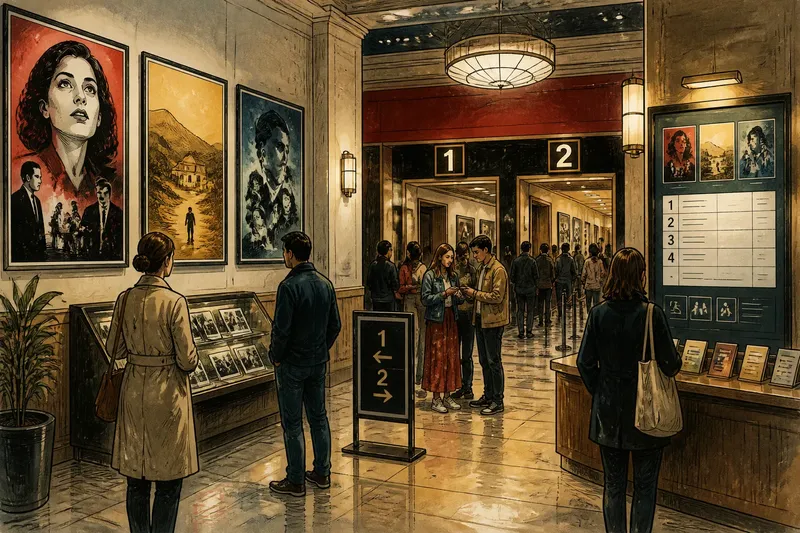
A cinema lobby asked you to notice something before the film began: perhaps a face on a poster, a title glowing above the doors, or the hush beyond the auditorium entrance. The cinema lobby is not merely a waiting area. It is a threshold where the public street gives way to a shared screening, and what matters there depends on how you arrive and what you need from the visit.
What should you notice if you arrive with time to look?
If you have a few unhurried minutes, start with the lobby’s visual choices. Posters, standees, still photographs and display cases offer a small, selective portrait of the film. They may emphasise a star, a mood, a setting or a striking image. That selection is already a form of invitation: it tells you what the cinema expects passers-by to recognise or find intriguing.
Look for what is left out as well as what is shown. A poster built around a landscape asks for a different kind of attention from one centred on a character’s expression. Neither reveals the whole film; each gives you a frame through which to approach it. The lobby prepares expectation without settling what the screening will mean.
Say you arrive early for an unfamiliar drama and find a display of photographs showing its rooms and streets, but no plot summary. You might take the images as an invitation to watch the film’s spaces closely. The observable result is a question to carry into the auditorium, not a prediction that the film will answer it in one particular way.
What fits if you are arriving in a hurry?
If you are watching the clock, the lobby’s practical signals take priority. Find the auditorium number, check the screen information, and follow the route that keeps you moving without cutting through another audience’s queue. In this situation, a large title or clear directional sign does more for your experience than a detailed display.
This is not a failure to appreciate the lobby. Its threshold role includes helping people pass from public space into the right room with as little uncertainty as possible. A clear path can also make arrival feel less abrupt: you have a moment to settle your attention rather than entering the screening while still searching for your seat.
If a sign is hard to read or the route is unclear, ask a staff member rather than guessing through a doorway. The film’s surroundings may be designed to attract a wandering glance, but practical information should be easy to identify when you need it.
What does the lobby ask you to notice about other viewers?
A cinema is a public place, but its audience is also a temporary group. The lobby makes that combination visible. People arrive separately, gather near the same doors, and gradually orient themselves towards one screening. You may notice a queue, a family comparing tickets, or strangers making room for one another. These are small acts of coordination, not a conversation everyone has to join.
The change resembles stepping from a busy pavement into a shared room: the surroundings still contain other people, but your attention begins to adjust to their presence. A lobby can encourage that adjustment through its layout. Open areas give people space to wait, while a narrow passage naturally asks them to keep moving. Neither arrangement makes every visitor behave alike; both shape what kinds of movement are comfortable.
If you are meeting someone, agree on a clear landmark, such as the auditorium sign or the main entrance, rather than assuming you will spot one another in a crowd. If you are alone, you can take in the displays without treating the lobby as a place where you must perform enthusiasm. Watching quietly is a valid way to share the space.
Which lobby details reward a second look?
Some details become noticeable only after the first practical decisions are settled. Look at how the display relates to the route into the auditorium: is the artwork placed where people can stop, or where they are expected to pass? Notice whether the lobby’s lighting makes posters easy to read, and whether its layout separates waiting from walking.
These details show how the cinema directs attention without needing to explain itself. A display beside the entrance may catch a visitor’s eye before they have chosen a film. One near the auditorium can sharpen anticipation for people who already know where they are going. In either position, the display is part of the transition, not a substitute for the screening.
Programme cards, screening boards and ticket information also deserve attention for a different reason: they connect the image of a film to the actual event you have come to attend. Check the title and auditorium details before moving on. Where wording or access information is unclear, rely on staff guidance and the cinema’s stated arrangements.
What do readers ask about the cinema lobby?
Why do cinemas put film posters in the lobby?
Posters draw attention to selected features of a film and help visitors recognise what is showing. They also give people a visual point of contact while they wait, without telling them what to think about the screening.
Is a cinema lobby part of the moviegoing experience?
Yes: it is where arriving, finding the screen and joining other viewers begin to meet. Its signs and displays can shape your attention before the film starts, even though the screening itself remains the central event.
What should I look at before entering the auditorium?
Check the screen information and route first, then notice any artwork or display that interests you. If time is short, prioritise clear directions; if you have time, consider what the lobby’s chosen images invite you to expect.
Do all cinema lobbies serve the same purpose?
They share the task of receiving visitors and directing them towards screenings, but their arrangements differ. A compact foyer may focus on movement, while a larger lobby may leave more room to pause, browse or meet.
Which approach fits the way you have arrived?
Choose your attention according to your immediate situation. If you are early and curious, read the lobby’s visual cues as invitations rather than explanations. If you are late or unfamiliar with the building, use the signs and ask for help where needed. If you are meeting someone, select a landmark and leave the route clear for others.
What a cinema lobby asks viewers to notice is therefore not one fixed thing. It may direct your eye towards a film, your attention towards the people arriving alongside you, or your steps towards the right auditorium. The useful question is what the space is making easiest to notice just now. That answer can help you cross the threshold with your attention ready, while leaving the film free to surprise you.